Start with the result: a routine that’s quick, repeatable and pleasurable
An organized beauty routine saves time, reduces waste and makes daily care feel like less of a chore. You don’t need an entire new collection—what matters is a clear daily order, a slimmed-down product set you actually use, and storage that keeps things visible and accessible. Ignore one-off trends, unopened product backlogs, and overly elaborate multi-step systems unless you enjoy them; focus on consistency and friction-free access.
Choose your essential daily order
Decide a short, consistent morning and evening sequence and write it down where you’ll see it (mirror, habit app, or a small card). A reliable order removes decision fatigue and speeds you up.
- Example morning: cleanse → vitamin C/serum → moisturizer → SPF → quick makeup (tint, concealer, mascara).
- Example evening: remove makeup → cleanse → targeted treatment (retinol/actives) → moisturizer/face oil.
Limit each routine to the core steps you actually need. Extra steps are optional and can be rotated (exfoliation 1–3× weekly, masks weekly).
Declutter so the routine matches your reality
Work zone by zone (drawer, countertop, travel pouch). Pull everything out, check use and expiry, and sort into three piles: keep, store for later, discard/donate. Be strict: if you haven’t used an item in six months or it’s duplicated (three neutral eyeshadows, for example), remove it.
- Check SPF and active serums for a 6–12 month open-date rule; toss unstable products that smell off or separate.
- Group single-use products (samples) together; decide if they fit your daily order or go to a travel kit.
Pick storage that enforces visibility and limits decision points
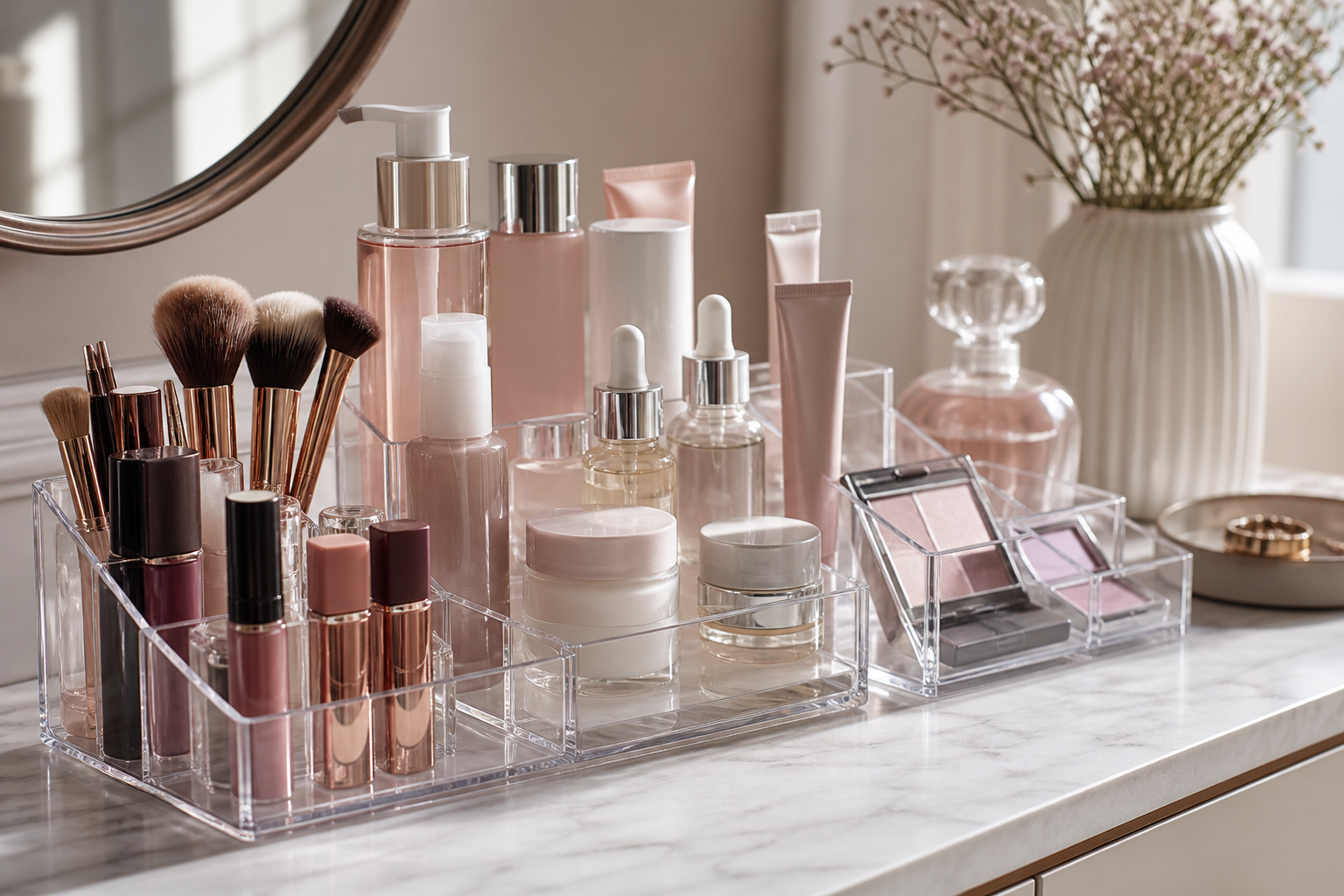
Choose one visible spot for daily essentials and a separate home for less-used items. Clear organizers, a small tray, or a compact countertop unit keeps items readable at a glance so you don’t have to hunt.
When choosing a cosmetic organizer, think capacity, compartment size, and how it fits your routine—do you need tall sections for pump bottles or shallow compartments for palettes? For a refined vanity, a tempered glass makeup organizer often balances visibility with a polished look.
The goal: the five items you touch every morning should live together—cleanser, morning serum, moisturizer, SPF, and your face tint or concealer.
[h3]Arrange by frequency, not by category[/h3>Place daily-use items on the counter or top drawer front; weekly or seasonal items go deeper in drawers. For travel, keep a grab-and-go pouch with your simplified essentials so packing is one smooth motion.
Designate tools and a simple maintenance schedule
Assign one place for brushes, tools, and devices (electric brush cleaner, tweezers, lash curler). A weekly 10–15 minute brush-cleaning routine prevents build-up and keeps makeup application smooth.
- Quick rinse: daily blot with a microfiber towel if you’re short on time.
- Full clean: use a gentle brush cleaner or mild shampoo weekly; reshape and dry bristles flat.
Build habit cues and small rituals that make the routine enjoyable
Turn small practical moves into pleasurable cues: keep a scented hand cream by the sink, light a neutral-smelling candle for weekend self-care, or pair skincare with a two-minute breath or posture check. These cues help anchor the habit without adding complexity.
Make decisions once—then automate
Use labels or a simple sticker system (AM/PM) to avoid re-evaluating what to use. Batch shopping and a 30–60 day product review on your calendar stop slow drift into clutter. If you travel frequently, prepare two travel kits: one for carry-on essentials and one for checked luggage with less-used items.
Troubleshooting common friction points
Too many products feel overwhelming
Cut the routine in half for two weeks: remove either all supplemental serums or makeup steps. If you miss them, reintroduce selectively. If not, donate or store them.
My vanity has no counter space
Use stackable drawer organizers or a rotating 360 organizer to maximize vertical space. Keep only morning essentials on top and store the rest in a labeled drawer.
Products expire before I finish them
Buy smaller sizes or switch to multi-use products (tinted moisturizer with SPF, 2-in-1 cleanser/makeup remover) so you actually finish what you open.
When to upgrade storage, and what to prioritize
Invest in a premium organizer when your daily set is stable: clear compartments sized to your bottles, a dedicated brush cup, and a shallow drawer tray for palettes. Otherwise, prioritize a tidy system over an expensive display piece—function beats aesthetics when you’re building a lasting routine.
Practical next steps to implement tonight
- Write your morning and evening order on a small card.
- Pull out daily products, check expiry marks, and consolidate duplicates.
- Set up a visible “daily five” in a single organizer or pouch.
- Schedule a 10–15 minute weekly brush clean and a monthly 30-minute declutter.
- List your true daily steps on a mirror card.
- Remove unused or expired items from your collection.
- Place morning essentials together in a clear organizer or pouch.
- Schedule weekly brush cleaning and monthly declutters.
- Label AM/PM products to avoid decision drift.
Simplify first, then refine: commit to a short daily order, pare your collection to what you actually use, and use storage that keeps essentials visible. Small maintenance habits—weekly brush cleaning, labeling, and periodic decluttering—prevent backsliding and make your beauty routine reliably enjoyable.
How do I decide which products are essential?
Keep the items you use at least three times a week and that serve a unique purpose in your routine (e.g., SPF, daily cleanser, main moisturizer, one tinted base or concealer, and mascara).
What’s the best spot to store daily skincare?
Store daily AM products next to the sink or on the vanity where you get ready; PM products can live by the bedside or in a nightly drawer for ease at bedtime.
How often should I clean makeup brushes?
Full wash weekly for foundation or cream brush users; biweekly for powder-only brushes. Quick daily wipes help between washes.
Can I keep travel-sized samples in my routine?
Yes—use a dedicated travel kit for samples and evaluate after finishing one to decide if the full-size fits your routine.
Which organizer should I buy first?
Choose an organizer that fits your five daily items visibly; a clear acrylic or tempered glass unit that holds pumps upright is a versatile first purchase.