Answer up front: how often to exfoliate
For most people, exfoliating the face 1–3 times per week is the right starting point. How often you should exfoliate depends on three practical variables: your skin type (sensitive, normal, oily/acne-prone, mature), the exfoliant type (chemical vs. physical), and the strength/frequency recommended by the product. Skip the marketing extremes—daily scrubs are usually too much unless you use a very mild chemical exfoliant formulated for daily use and your skin tolerates it.
Why the 1–3×/week rule works
Skin naturally renews on a roughly 28–40 day cycle in adults; exfoliation helps remove dead surface cells to reveal smoother, brighter skin and allows actives to penetrate. Doing this one to three times weekly balances removal of dead cells without damaging the skin barrier. Less than once weekly may leave texture and dullness; more than three times (especially with abrasive methods) risks irritation, redness, and long-term barrier damage.
Match frequency to exfoliant type
Chemical exfoliants (AHAs like glycolic/lactic acid, BHAs like salicylic acid, and enzymes) and physical exfoliants (scrubs, brushes, microderm tools) behave differently and need different cadences.
- Chemical exfoliants: Low-strength AHAs or BHA serums (around 5–10% AHA or 0.5–2% BHA) are generally safe 1–3×/week. Mild lactic-acid cleansers or low-percent daily AHA/BHA products can be used daily if labeled for daily use and if your skin tolerates them.
- Enzymatic exfoliants: (papaya, pineapple enzymes) are gentler and can be used 1–3×/week or more often if formulated for daily application—still patch-test first.
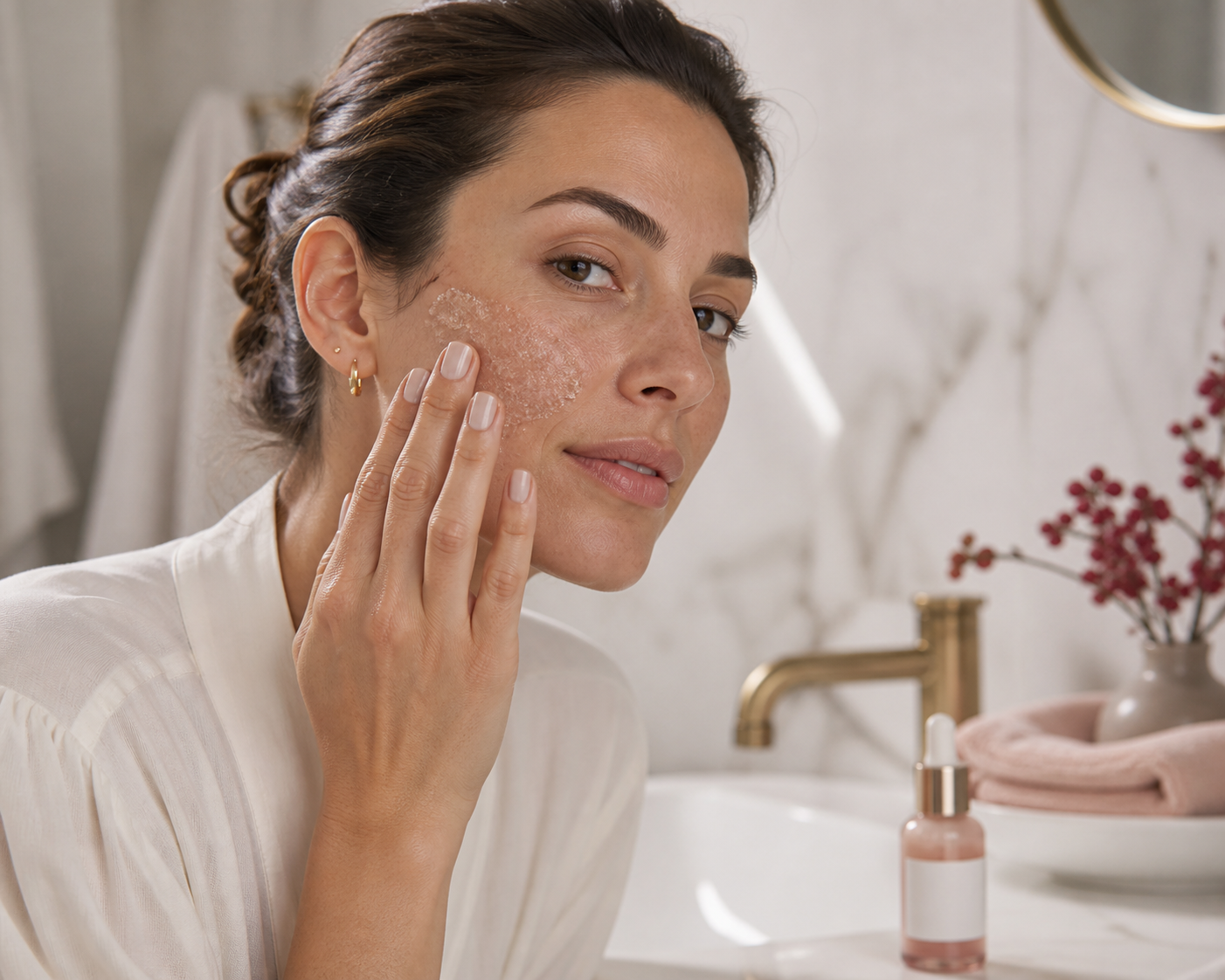
- Physical scrubs and brushes: Use these sparingly—typically 1×/week for normal skin, 1–2×/week for oilier skin, and avoid on sensitive or rosacea-prone skin. Avoid coarse particles (walnut shells, sugar larger granules); choose fine jojoba beads or a soft brush head.
- At-home devices (microdermabrasion kits, dermaplaning): Space these procedures farther apart—every 2–6 weeks depending on intensity and skin tolerance.
Adjust for skin type and conditions
Here’s how to tune frequency to your skin:
- Sensitive or reactive skin: Start with once every 10–14 days and use gentle chemical options (low-strength lactic acid or an enzyme). Avoid abrasive scrubs and electrical brushes.
- Dry or dehydrated skin: Limit to 1×/week and follow immediately with hydrating serum and occlusive moisturizer to restore barrier.
- Oily or acne-prone skin: 2–3×/week of a BHA (salicylic acid) can help clear pores; alternate chemical days with gentle cleanser-only days to avoid over-drying.
- Mature or textured skin: 2–3×/week with an AHA (glycolic or lactic) can help with brightness and surface lines; consider professional peels for stronger results under supervision.
- Rosacea or active eczema: Avoid routine exfoliation; consult a dermatologist and focus on barrier repair products instead.
Signs you’re exfoliating too often
Reduce frequency if you notice persistent redness, stinging that lasts well after application, flaking that doesn’t resolve with moisturizer, increased breakouts, or exaggerated sun sensitivity. Over-exfoliation often feels tight and itchy—those are barrier-compromise signals.
How to build an exfoliation routine you can follow
Pick one primary exfoliant and schedule non-exfoliation recovery days. Example routines:
- Simple starter (sensitive or dry): Gentle enzyme mask once weekly; use hydrating serum and rich moisturizer afterward.
- Balanced routine (normal/combination): BHA serum Monday and Thursday; gentle cleanser other days; retinol nights only twice weekly on non-BHA days.
- Targeted routine (oily/acne-prone): Salicylic acid leave-on 2–3×/week; consider alternating with a clay mask for oil control; follow with lightweight moisturizer.
When introducing any new exfoliant, follow a “start low, go slow” approach: patch-test, begin every 3–4 days, and increase frequency only if there’s no irritation after 2–4 weeks.
Ingredients to pair and avoid
Pair exfoliation with hydration and barrier support: hyaluronic acid, ceramides, glycerin, peptides and niacinamide help recover the skin. Avoid layering strong actives on the same night—especially avoid using high-strength AHA/BHA with retinol or vitamin C unless a professional has advised a combined plan. If you use both, alternate nights or use under professional guidance.
Sun protection is non-negotiable
Exfoliation increases sun sensitivity. Use a broad-spectrum SPF 30+ daily and reapply. On days after exfoliation, be especially diligent—exposure can lead to pigmentation and irritation faster than usual.
When to see a professional
Persistent irritation, worsening redness, or if you want stronger resurfacing (medical-grade peels, prescription retinoids combined with chemical peels), consult a dermatologist or licensed aesthetician. Professional treatments can be scheduled every 2–8 weeks depending on modality and healing time.

One product that helps make exfoliation safer
If you want a tool to aid gentle, controlled exfoliation and cleansing at home, a waterproof facial cleansing brush with multiple heads is a practical option for most non-sensitive skin types. Use the softest brush head and limit use to 1×/week initially, increasing only if your skin tolerates it.
Quick recap: a practical checklist before you exfoliate
Decide your frequency based on skin type and exfoliant strength—1–3×/week for most; less for sensitive skin. Always patch-test, follow with hydration and daily SPF, and stop if irritation appears.
- Have I identified my skin type and sensitivity?
- Is the product labeled for daily use if I plan to use it every day?
- Did I patch-test the product on the inner wrist or behind the ear?
- Do I have a hydrating moisturizer and SPF ready for post-exfoliation care?
- Am I avoiding layering strong actives on the same night?
Most people should exfoliate their face 1–3 times per week, tailored to skin type and the exfoliant used. Begin conservatively, build up only with good recovery practices (hydration and sunscreen), and consult a professional for stronger or combined treatments.
Can I exfoliate every day?
Only with very mild, daily-formulated chemical exfoliants and if your skin shows no irritation; most people will overdo it with daily physical scrubs or strong acids.
Should I exfoliate before applying serum or retinol?
Gentle exfoliation can improve serum absorption, but avoid combining strong acids and retinol the same night; alternate nights to reduce irritation risk.
Is physical or chemical exfoliation better?
Chemical exfoliants offer more even results and are generally gentler for most skin types; physical methods work for immediate polish but carry higher abrasion risk.
How soon will I see results from exfoliating?
Surface smoothness and brightness can appear after one use; more lasting texture improvements take several weeks of consistent, tolerated use.
Can exfoliation cause dark spots?
Excessive exfoliation without sun protection can increase pigmentation; always use SPF after exfoliating and avoid sun exposure during recovery.
If you’d like, I can recommend specific mild chemical exfolients for daily use or show you how to combine exfoliation with retinol safely.