When you pick up a new face cream and squint at the tiny ingredient list
You’ve been here: you want to solve dryness, acne or early lines, but the label reads like a chemistry quiz. The quickest useful answer is: learn to spot the core categories and the few names that matter for your goals. This skincare ingredients guide will show you which ingredient types to prioritize, what commonly confused terms mean, and a simple way to choose products without getting overwhelmed.
Quick answer: the four ingredient categories you should know
Start by scanning for these groups—each tells you what a product will do.
- Hydrators (humectants): glycerin, hyaluronic acid — draw and hold water in skin.
- Barrier-repair and emollients: ceramides, fatty acids, squalane — restore the skin barrier and smooth texture.
- Active treatments: retinoids, vitamin C (ascorbic acid), niacinamide, AHAs/BHAs — targeted changes (anti-aging, brightening, exfoliation).
- Protectants and sunscreens: zinc oxide, titanium dioxide, avobenzone — prevent UV damage and protect results.
Once you can recognize these groups, reading any label becomes a lot less mystifying.
How to read an ingredient list quickly and sensibly
Product labels list ingredients in descending order by concentration (INCI names). Use that to set expectations:
- First five ingredients tell you the product's base—usually water (aqua), then oils, silicones or humectants.
- Look for named actives (niacinamide, retinol, glycolic acid). If a promising active appears near the bottom, it may be present at a low, possibly ineffective concentration.
- Fragrance can appear as “parfum” or a botanical extract; if you’re sensitive, consider fragrance-free options even if the product otherwise looks good.
Common actives and when to use them
Here are practical pairings of common ingredients with the skin concerns they address.
- Acne-prone or oily skin: salicylic acid (BHA) clears pores; niacinamide reduces oiliness and redness. Use a salicylic cleanser or a serum 2–3x/week depending on tolerance.
- Dryness or barrier issues: hyaluronic acid + ceramides + squalane. Layer humectant (serum) then occlusive/moisturizer to lock moisture in.
- Signs of aging or texture: retinoids (retinol, retinaldehyde or prescription tretinoin) encourage cell turnover; pair with a moisturizer and introduce gradually.
- Uneven tone and dullness: vitamin C (L-ascorbic acid) for brightening; AHAs like glycolic acid for surface exfoliation.
- Daily protection: broad-spectrum SPF with zinc oxide or avobenzone is non-negotiable if you use actives that increase sun sensitivity.
Practical choices and typical trade-offs
Products blend multiple benefits, and that means trade-offs:
- Pure vitamin C serums (L-ascorbic acid) can be powerful but unstable and sometimes sensitizing; if your skin is sensitive, try a gentler derivative (magnesium ascorbyl phosphate) or lower concentration.
- Retinol is effective but can cause dryness and irritation at first—start with a low concentration and use every third night. If you can’t tolerate retinol, bakuchiol offers a gentler, plant-derived alternative with some similar effects.
- Chemical exfoliants (AHAs/BHAs) provide more even exfoliation than scrubs, but overuse causes barrier damage—limit to 1–3 times weekly based on strength and skin reaction.
How to combine actives safely
Sensible pairing reduces irritation while maximizing benefits:
- Niacinamide pairs well with most actives and calms sensitivity from stronger ingredients.
- Avoid layering strong exfoliants (high % AHA) with retinol in the same routine; alternate nights instead.
- Always follow actives with sunscreen during the day—this includes acids, retinoids and even some antioxidants.
Spotting marketing vs. meaningful ingredients
Not every buzzword on a label matters at effective doses. “Infused with mushrooms” or “contains peptides” may be real, but check placement: if the peptide appears near the end of the INCI list, it may have a negligible concentration. Look for clarity in claims (percentages or specific concentrations) and for clinically backed names rather than vague plant “complexes.”
When to patch-test, and how to introduce new actives
Patch-test a new active on your inner forearm or behind the ear for 48–72 hours. For strong actives (retinol, acids):
- Introduce once every 3–4 nights for 2 weeks, then increase frequency as tolerated.
- Keep a simple moisturizing routine on other nights to protect the barrier.
- If you get persistent redness, burning, or flaking, pause use and consult a dermatologist.
One product suggestion to help you get started
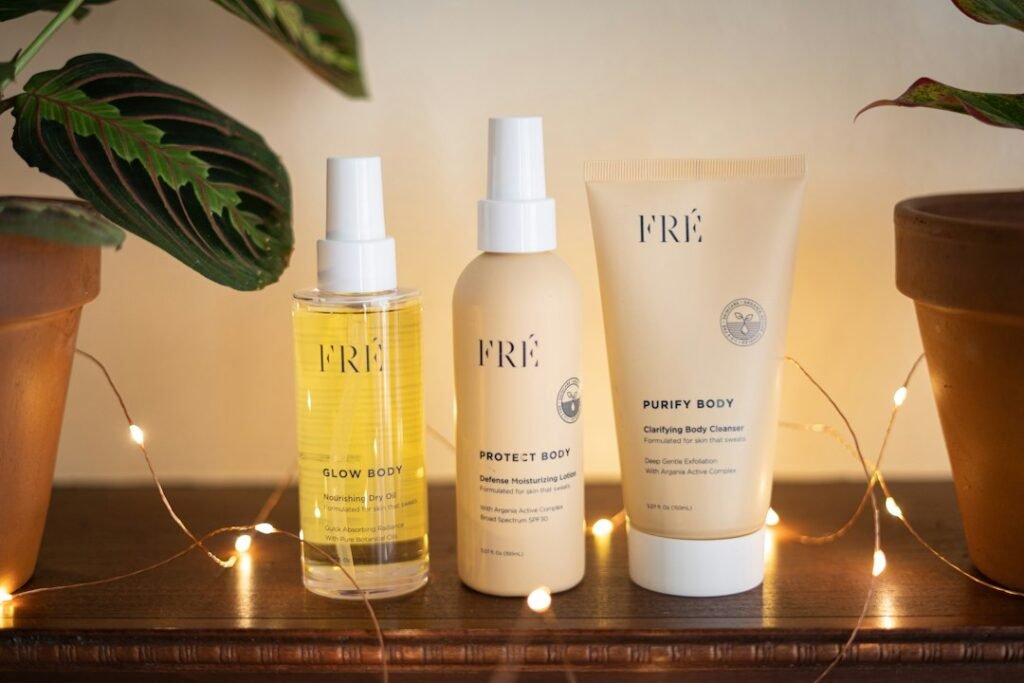
If you want an introductory set that demonstrates ingredient variety and safe layering, a curated skincare set is a practical starting point—for daily cleansing, hydration and a mild active to experiment with.
Simple morning and evening routines using ingredient logic
Use ingredient roles, not product names, to build routines:
- Morning: gentle cleanser → antioxidant serum (vitamin C or niacinamide) → moisturizer with ceramides → broad-spectrum SPF.
- Evening: cleanser → treatment (retinol or chemical exfoliant on alternating nights) → hydrating serum (hyaluronic acid) → rich moisturizer/occlusive if needed.
When to see a professional
If persistent inflammation, sudden worsening acne, or reactions occur, a dermatologist can test for allergies, prescribe specific actives at known concentrations, or recommend medical-grade formulations. Over-the-counter products are great for prevention and mild concerns, but severe or unusual conditions need clinical evaluation.
- Scan the first five INCI ingredients to understand the product base.
- Identify one primary active that matches your main concern.
- Patch-test new actives before full-face use.
- Introduce retinoids and acids slowly—alternate nights as needed.
- Choose fragrance-free if you have sensitive skin.
- Always wear SPF when using exfoliating or retinoid products.
Focus on ingredient roles—hydrators, barrier builders, active treatments and sunscreens—rather than every listed word. Read the first five ingredients, prioritize one or two actives for your concern, introduce them slowly, and protect your skin with consistent moisturization and SPF.
How can I tell if an ingredient is active enough to matter?
Check where it appears in the INCI list—ingredients near the top are present at higher concentrations. Brands sometimes state percentages for potent actives; lack of concentration info doesn't always mean it's ineffective, but prominence in the list helps.
Can I use vitamin C and retinol together?
They can be used in the same routine for some people, but many prefer vitamin C in the morning and retinol at night to reduce irritation and preserve each ingredient's stability.